

When you have sensitive skin, the best approach is always a gentle one. Think all-natural ingredients, a real focus on sustainability, and formulas backed by good science designed to soothe and protect. It's about finding products rich in botanicals, free from the usual irritants, that make your routine both effective and a genuinely calming experience through natural, subtle scents.
Finding Your Calm Skincare Ritual
Let’s be honest, navigating the world of skincare with a sensitive complexion can be completely overwhelming. There’s that constant fear of redness, irritation, or an unexpected breakout that turns choosing a new product into a high-stakes decision. This guide is here to help you move past that anxiety and create a nurturing routine that works with your skin, not against it.
We'll walk through how to pinpoint your unique triggers and build a personalised regimen that feels both luxurious and truly effective. The key is mindful selection, showing you how beautifully scented, naturally derived formulas can be powerful without being harsh, all thanks to the clever science behind them.
The Science of Gentle Skincare
Understanding the science behind what makes soothing botanicals work is everything. All-natural ingredients like chamomile, calendula, and oat extract aren't just nice-to-haves; they contain active compounds that work at a cellular level to calm inflammation and strengthen your skin’s natural barrier. This is how even scented products can be incredibly kind—by using plant-derived aromas that delight the senses without causing distress. The science focuses on delivering these natural compounds effectively, ensuring they perform their calming duties deep within the skin.
And it’s an approach that's really catching on. The demand for specialised products is growing fast. Australia's sensitive skincare market was valued at USD 545.72 million in 2024 and is expected to nearly double by 2033. This shows a massive shift, with more people seeking out dermatologist-tested and hypoallergenic options. You can read more about this sensitive skin care market trend.
The goal is to turn your daily care into a calming ritual you actually look forward to. It’s about more than just what’s in the bottle; it’s about creating moments of peace with natural scents that benefit both your skin and your mind.
Embracing this philosophy also means thinking about the planet. Choosing brands committed to sustainability, with reusable or refillable packaging, connects your personal care choices with a greater sense of responsibility. This conscious choice often reflects a brand's commitment to clean, all-natural formulas that are as gentle on the earth as they are on your skin.
Getting to Know Your Sensitive Skin
Before you can build a routine that truly works, you have to play detective. The first step is always about listening to your skin and figuring out what it’s trying to tell you. What are its triggers? Is it that new, heavily fragranced moisturiser that left you feeling tight and irritated? Or maybe it’s the harsh foaming cleanser that always seems to cause a flare-up?
Taking a moment to pinpoint these reactions is the key to finding lasting comfort. It’s less about chasing trends and more about understanding the unique science of your own skin.
This journey is all about moving from a state of feeling overwhelmed by constant reactions to feeling calm, balanced, and in control.
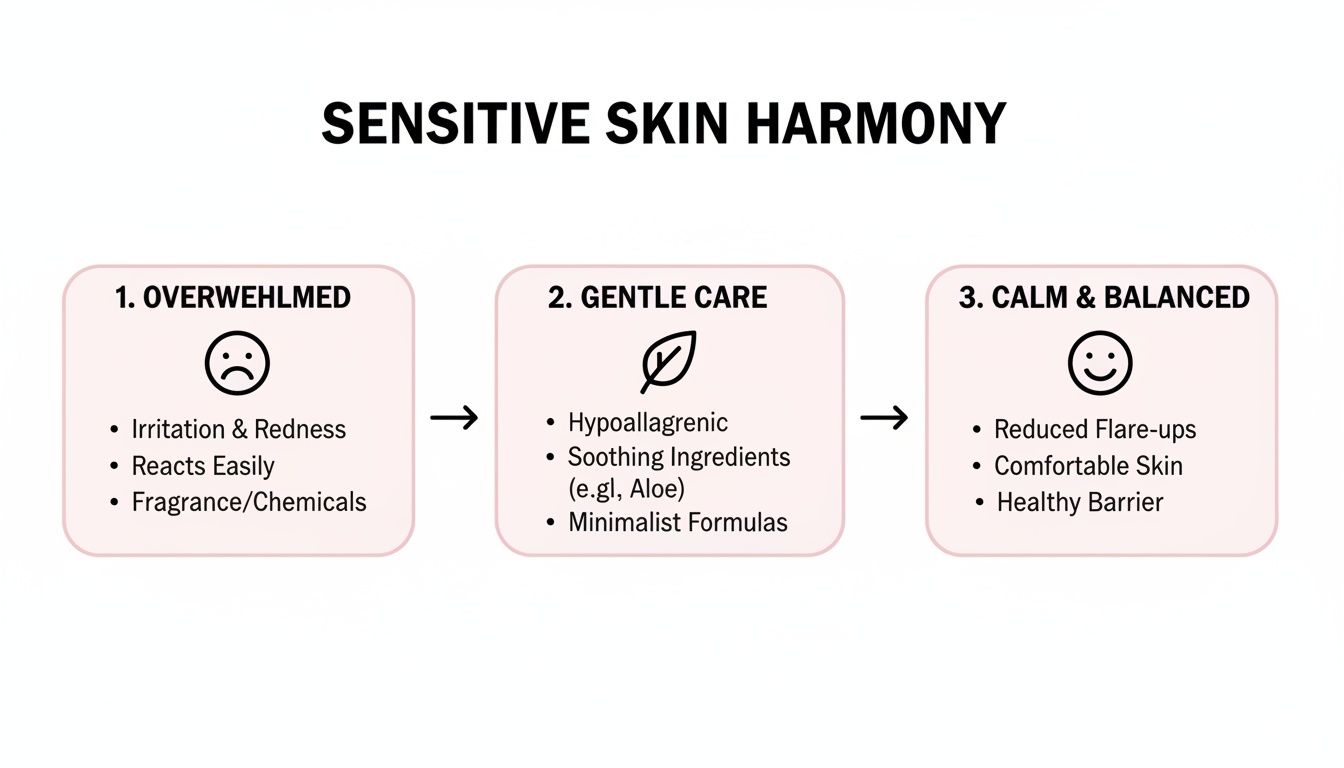
It really proves that a simplified, thoughtful approach is often the most powerful way to get your skin back on track.
The Truth About "All-Natural"
It's easy to assume that "all-natural" automatically means "gentle," but that’s a common misconception. Nature is powerful, and some botanicals can be surprisingly potent and irritating for reactive skin types. The real secret isn't just the all-natural ingredient itself, but the science behind how it's formulated.
It all comes down to the science of how those ingredients are chosen, balanced, and combined to soothe rather than provoke. This is why all-natural ingredients like calendula, chamomile, and oat extract are such heroes for sensitive skin. They contain well-researched compounds, like bisabolol from chamomile or avenanthramides from oats, that actively calm inflammation and help fortify a weak skin barrier. The formula's job is to deliver these compounds effectively.
Decoding Ingredients: What to Look For (And What to Avoid)
When your skin is reactive, the ingredient list becomes your best friend. Knowing what to embrace and what to be wary of can make all the difference. Here’s a quick guide to help you navigate your next skincare purchase with a little more confidence.
Sensitive Skin Ingredient Guide: Dos and Don'ts
| Ingredient Category | Embrace (The Dos) | Approach with Caution (The Don'ts) |
|---|---|---|
| Hydrators | Hyaluronic Acid, Glycerin, Panthenol (Pro-Vitamin B5), Squalane, Beta-Glucan | Alcohol Denat (Drying Alcohols), SD Alcohol |
| Soothers & Anti-Inflammatories | Centella Asiatica (Cica), Niacinamide, Allantoin, Bisabolol, Oat Extract, Calendula | Synthetic Fragrance/Parfum, Essential Oils (for some), Witch Hazel |
| Barrier Support | Ceramides, Cholesterol, Fatty Acids, Jojoba Oil, Shea Butter | Sodium Lauryl/Laureth Sulfate (SLS/SLES), Harsh Physical Scrubs |
| Exfoliants | Lactic Acid (gentle AHA), PHAs (e.g., Gluconolactone), Fruit Enzymes (in low concentrations) | Glycolic Acid (can be too strong), Abrasive Scrubs (e.g., nutshells) |
This isn't about creating a "bad" list; it's about empowerment. When you understand the science of why certain ingredients work, you can make smarter, more intuitive choices for your skin.
Finding Harmony with Scent
For many of us, scent is an essential part of the self-care ritual. But it's also a notorious trigger for sensitive skin, which can feel incredibly frustrating. The good news? You don't necessarily have to give up a beautiful sensory experience for the sake of calm skin.
The key is learning the difference between potentially irritating synthetic perfumes and mindfully formulated, all-natural plant-derived aromas. The science behind natural scent is fascinating; it’s about capturing the volatile compounds from plants without harsh solvents. Many people find their skin does just fine with scents from essential oils or botanical extracts, especially when they’re part of a balanced formula that also includes plenty of soothing agents.
Real confidence comes from understanding the why behind an ingredient. When you know the science—that panthenol is brilliant for calming inflammation or that hyaluronic acid is a moisture magnet—you can read an ingredient list with clarity instead of confusion.
This knowledge shifts you from making fear-based decisions to making informed ones. Instead of avoiding entire product categories, you can zero in on the specific compounds that support your skin. For example, knowing how the molecular structure of hyaluronic acid and panthenol support hydration can make you feel so much more comfortable trying out a new serum.
A Focus on Gentle Science and Sustainability
Choosing the right skincare often means looking at the bigger picture. We find that brands prioritising sustainability—through responsible sourcing of all-natural ingredients or refillable packaging—tend to apply that same level of care and thoughtfulness to their formulations.
This philosophy means their focus is on creating formulas where the science is designed to be kind to both your skin and the planet. It’s a holistic approach where the science behind a product and the ethics of its creation go hand-in-hand. By supporting brands that value this balance, you’re not just investing in your skin’s health, but in a more conscious beauty industry, too.
Crafting Your Morning Ritual for Resilient Skin
When you have sensitive skin, a morning routine isn't about piling on a dozen different products. It's about smart protection. The goal is simple: shield your delicate skin from the day's environmental stressors—think UV rays and pollution—while keeping it calm and hydrated. This ritual sets the tone for your entire day, proving that a minimalist, science-backed approach can deliver maximum results.
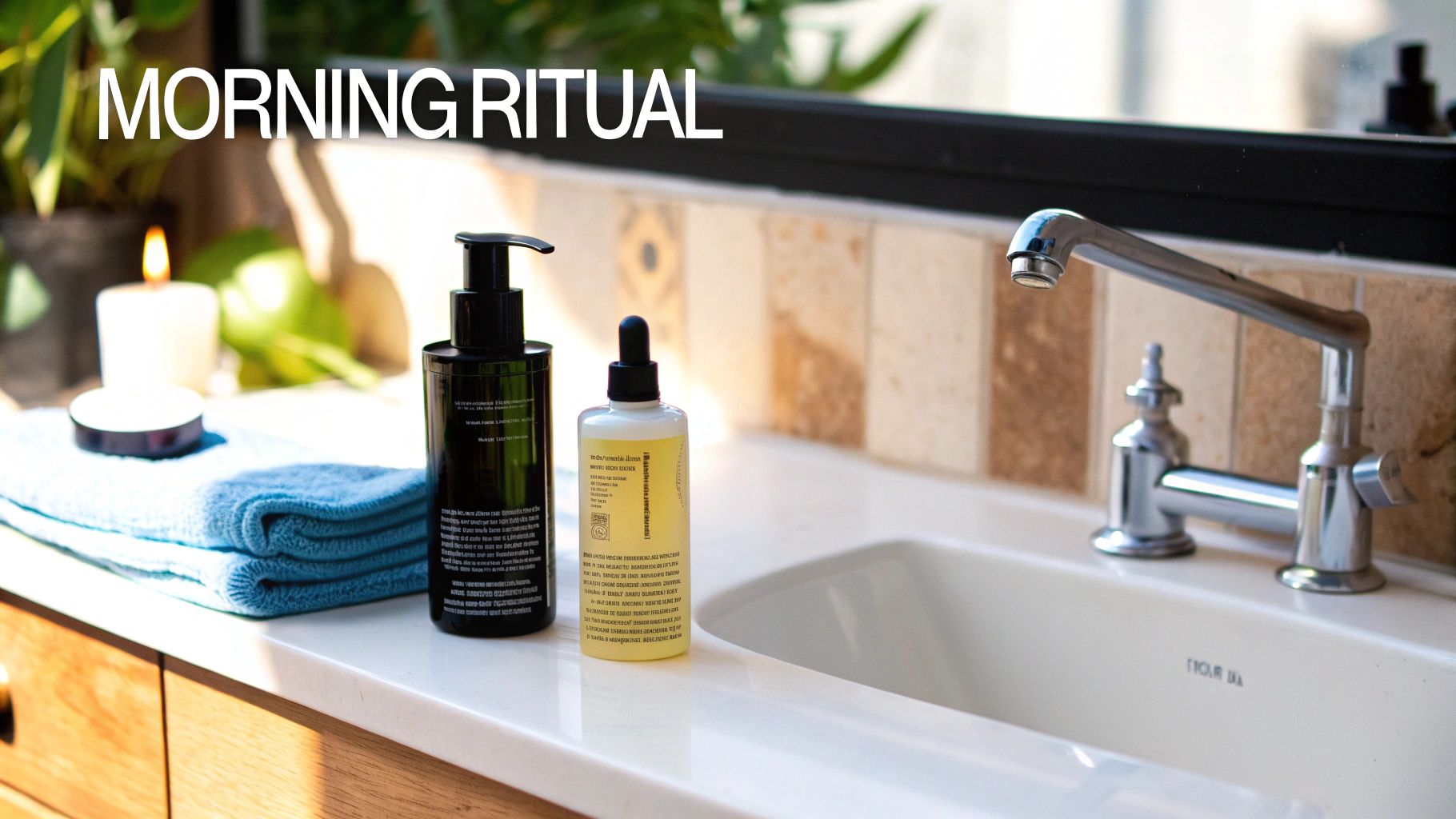
Let's move beyond generic advice and get into the why behind each step, so you can craft a routine that acts as both a protective shield and a quiet moment of self-care.
The Foundation: A Gentle Cleanse
Every morning routine starts with a cleanse, but the science behind how you cleanse is everything for sensitive skin. Forget those harsh, stripping foams. Your skin has spent the night in repair mode, and an aggressive wash can undo all that good work by compromising your all-important moisture barrier.
Instead, reach for a milky, cream, or gentle gel cleanser. These formulas are scientifically designed to lift away impurities without disturbing the delicate lipid layer that keeps your skin protected. Look for comforting, all-natural ingredients like oat extract or chamomile, which cleanse while their active compounds actively soothe the skin.
This gentle start creates the perfect, receptive canvas for the protective steps to come.
The Power of Antioxidant Serums
After cleansing, an antioxidant serum is your next crucial move. Think of it as your skin’s first line of defence against the environmental aggressors it’s about to face. The science is simple: antioxidants work by neutralising free radicals—those unstable molecules that can cause cellular damage and inflammation.
For a long time, Vitamin C was considered a no-go for many with sensitive complexions due to its potential for irritation. But skincare science and formulation have come a long way. Modern formulas now use gentler, more stable forms of Vitamin C, making its brightening and protective benefits accessible for even reactive skin.
Here’s the science to look for in a sensitive-skin-friendly Vitamin C serum:
- Gentle Derivatives: Instead of pure L-Ascorbic Acid, seek out derivatives like Sodium Ascorbyl Phosphate or Ascorbyl Glucoside. They are less acidic and convert to active Vitamin C on the skin, a biochemical process that seriously reduces the risk of a reaction.
- Soothing Companions: The best formulas pair Vitamin C with anti-inflammatory all-natural ingredients like Ferulic Acid, Vitamin E, or Panthenol. These work synergistically to boost antioxidant protection while keeping your skin calm.
- Hydrating Base: A serum formulated in a hydrating base of hyaluronic acid or glycerin helps to buffer the active ingredient while adding an extra layer of moisture.
By understanding the science, you can safely harness the power of this incredible ingredient. If you'd like to dive deeper, you can explore the science behind a Vitamin C active brightening serum like ours (https://www.kindlybyjoe.com/blogs/whats-inside-our-products/vitamin-c-active-brightening-serum) to see how it’s designed for efficacy without irritation.
Layering Hydration and Protection
Once your serum has fully absorbed, it’s time to lock in that moisture and add your final layer of protection. This is where a good moisturiser and a high-quality sunscreen come in. For sensitive skin, you want a moisturiser that's scientifically formulated with barrier-supporting ingredients.
Your morning routine is your daily armour. Each step—from the gentle cleanse to the final SPF application—is a deliberate act of protection that fortifies your skin against the outside world, allowing it to remain calm and balanced.
Look for moisturisers containing ceramides, shea butter, or squalane. These all-natural ingredients mimic your skin's natural lipids, helping to reinforce your moisture barrier, reduce water loss, and keep irritants out. Texture matters, too; a lightweight lotion or cream that sinks in cleanly will feel much more comfortable for daytime use than a heavy, greasy balm.
The final, non-negotiable step is sunscreen. Mineral-based sunscreens with zinc oxide or titanium dioxide are often the gentlest choice. The science behind them is simple: they work by sitting on top of the skin to physically block UV rays, rather than relying on a chemical reaction that could cause a flare-up.
The Sensory Experience: Scent and Sustainability
A morning routine can be more than just functional—it can be a grounding ritual. This is where natural scent can play a beautiful role. A subtle, natural aroma from all-natural botanical extracts can turn a simple application into a truly mindful moment of self-care.
Brands that focus on sustainability often extend this thoughtful approach to their entire process, from sourcing all-natural ingredients to using reusable packaging. Choosing products that align with these values adds another layer of intention to your morning, creating a ritual that feels good for your skin, your mind, and the planet.
Building an Evening Routine for Repair and Renewal
When the day winds down, your skin’s real work is just getting started. Night-time is its dedicated slot for repair and regeneration—a natural cycle where it actively heals from the day's environmental toll. An evening routine for sensitive skin is all about supporting this process with gentle, restorative care, backed by science.
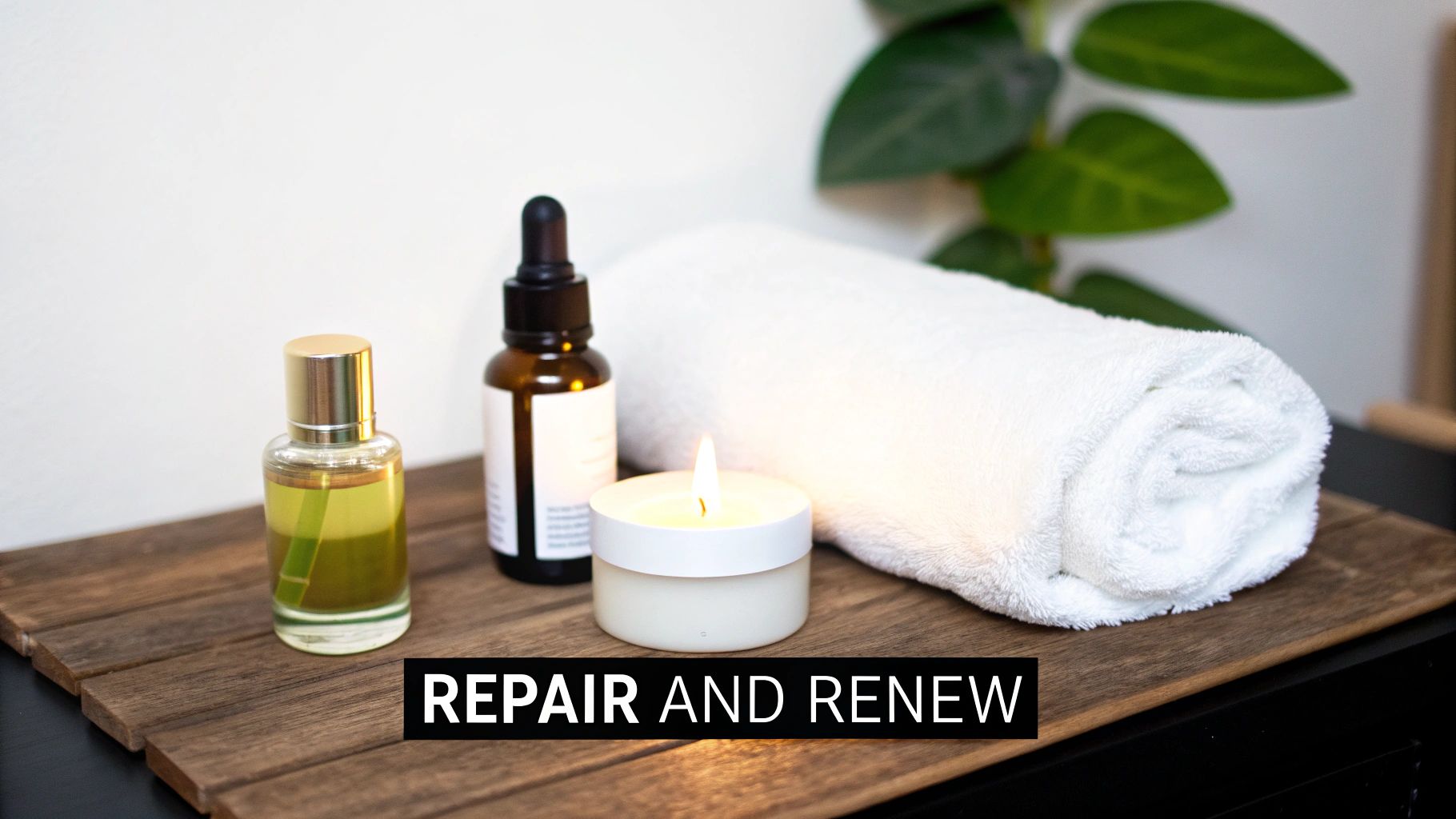
The goal here is simple: cleanse away the day, replenish moisture, and deliver barrier-loving ingredients. It’s also about creating a calming ritual, enhanced by natural scents, that signals to your mind and body that it's time to rest.
The Gentle Art of the Double Cleanse
For sensitive skin, the idea of cleansing twice might sound like overkill. But when done right, it's the kindest, most thorough way to lift sunscreen, makeup, and daily grime without resorting to harsh scrubbing or stripping formulas.
The science behind it is a two-part process:
- First Cleanse (Oil-Based): Start with a cleansing oil or a soft balm on dry skin. These work on a 'like dissolves like' chemical principle, effortlessly melting away oil-based impurities like SPF and makeup. Gently massage it in, add a splash of water to emulsify, and then rinse clean.
- Second Cleanse (Water-Based): Follow up with a mild, creamy, or milky water-based cleanser. This step whisks away any remaining residue, leaving your skin perfectly clean but never tight or uncomfortable. Look for formulas with soothing, all-natural botanicals to keep things calm.
This method ensures your skin is a clean canvas, ready to absorb the restorative treatments that come next.
Replenishing with Restorative Serums
With your skin cleansed and ready, it’s time for a treatment serum. Night is the perfect time for ingredients that focus on repair and barrier support. Instead of leaning on potent exfoliants that can overwhelm sensitive complexions, prioritise formulas with all-natural ingredients that soothe, strengthen, and hydrate.
Your evening routine is a conversation with your skin. You're gently removing the day's burdens and providing it with the nourishment it needs to repair itself overnight, ensuring you wake up to a calmer, more resilient complexion.
Two of the best ingredients for an evening routine are niacinamide and ceramides. The science shows that Niacinamide (Vitamin B3) is a celebrated all-rounder, known for its ability to calm inflammation and support the skin barrier. Ceramides are lipids already found in your skin, and applying them topically helps replenish what’s lost, locking in moisture and reinforcing your defences.
This targeted, scientific approach to repair is becoming a cornerstone of Australian skincare. Consumers are increasingly investing in scientifically-backed formulations, with a collective annual spend of around USD 25.4 billion on skincare and cosmetic treatments. Facial care, including serums and moisturisers, makes up the largest slice of this, accounting for 73.02% of the market share—a clear nod towards effective, high-quality products. You can explore more on these Australian skincare market trends.
Locking in Hydration with the Right Moisturiser
The final skincare step in your evening routine is a moisturiser. Its main job is to create a protective seal over your skin, a process known as occlusion, which prevents moisture from escaping while you sleep and locks in all the benefits of your serum.
For sensitive skin, the texture is just as important as the formula. You might prefer a rich, comforting cream or a lighter gel-cream, depending on what your skin is asking for. Look for moisturisers packed with all-natural, barrier-loving ingredients like shea butter, squalane, and oat extract to deeply nourish and soothe overnight. This final step ensures you wake up with a complexion that feels soft, plump, and hydrated.
Scent and Sustainability for a Restful Ritual
Beyond the products, the atmosphere you create can elevate your entire evening ritual. Lighting a beautifully scented candle made from natural waxes can create a serene space, and its gentle, all-natural aroma can act as a sensory cue for your body to unwind. This small act transforms a routine into a moment of true self-care.
Choosing brands that champion sustainability with reusable or refillable packaging adds another layer of mindfulness. Knowing your all-natural products are as kind to the planet as they are to your skin deepens the sense of wellbeing, making your evening ritual a truly holistic practice for repair and renewal.
So, you’ve found a few products that look promising. That's fantastic, but finding them is only half the journey. The real secret to success with sensitive skin is knowing how to introduce them into your routine without causing a flare-up. It's less about a leap of faith and more about a slow, intentional dance with your skin.
This is where you shift from simply buying products to truly understanding them. It’s about building confidence through a smart process—testing a formula properly, seeing past the marketing hype, and making sure the products you choose align with your values on sustainability and natural ingredients.
The Fine Art of the Patch Test
Think of a patch test as your first conversation with a new product. It’s a simple, low-stakes way to see how your skin will react before you commit to slathering it all over your face. A quick dab once isn’t enough, though. A proper test needs a bit more discipline.
Here’s the method I always recommend:
- Pick a Hidden Spot: Find a small, out-of-the-way area. Behind your ear, on the side of your neck, or even your inner wrist are all great choices.
- Be Consistent: Apply a small amount of the product to that same spot for 3-5 days straight, both morning and night. This mimics real-world use and helps catch delayed reactions that a one-time test would miss.
- Watch and Wait: Keep a close eye on the area. Are you seeing any redness, feeling any itching or stinging, or noticing any tiny bumps? If anything feels off, stop immediately.
This methodical approach is absolutely crucial, especially when you’re considering adding active ingredients to your routine. For example, if you're curious about how a thoughtfully formulated, science-backed retinol night restore could work for you, a diligent patch test is completely non-negotiable.
The "Go Slow" Onboarding Method
Once a product has successfully passed the patch test, it’s time to welcome it into your routine—but slowly. The goal is to give your skin time to get used to the new formula, which dramatically reduces the chances of it feeling overwhelmed.
My golden rule? Introduce only one new product at a time.
For something you'll use daily, like a new serum or moisturiser, start by applying it every other day for the first week. If your skin is still calm and happy, you can graduate to using it every day. This gentle onboarding is the kindest way to see if a new product is a true friend to your skin.
A safe introduction isn’t just about avoiding a bad reaction. It’s about building a trusting relationship with your skincare. By testing patiently and introducing products one by one, you give yourself the power to know exactly what makes your skin thrive.
Look Beyond the Formula: The Importance of Sustainability
Choosing the best skincare for sensitive skin isn't just about what's in the bottle. It's also about the brand behind it. When a company is dedicated to things like all-natural ingredients and sustainable practices, you can often feel that same level of care in the products they create.
When you support brands that use reusable or refillable packaging, you’re making a choice that’s good for your skin and the planet. It’s a simple way to turn your daily ritual into something more meaningful.
Look for transparency. A brand that’s open about how they source their all-natural ingredients and make their products is usually one that’s committed to quality from start to finish. This often means you’re getting a meticulously crafted formula where the science is just as important as the beautiful, natural scent. It's about finding products that not only work but are also made with integrity.
A Few Common Questions About Sensitive Skincare
Even with the best roadmap, a few questions are bound to pop up when you're paving a new path for your skin. It’s completely normal. Diving into the world of sensitive skincare can feel a little daunting, so I’ve answered some of the most common queries I hear to help clear things up.
Can I Still Use Active Ingredients Like Vitamin C?
Absolutely. The secret isn't about avoiding powerful ingredients altogether; it's about choosing the right science-backed formulations. Many people with sensitive skin get incredible results from Vitamin C, but the trick is to look for gentle, stable forms like Sodium Ascorbyl Phosphate at a lower, yet still effective, concentration.
The best formulas often pair the active with soothing, all-natural buffers—think aloe vera or hyaluronic acid. This smart, scientific combination delivers all the brightening benefits without overwhelming your skin. Just remember to patch test and introduce it slowly, maybe starting with every other day, to give your skin time to get acquainted.
Is 'Fragrance-Free' Always the Best Choice?
Not necessarily, and this is probably one of the biggest myths when you’re looking for the best skincare for sensitive skin. While synthetic "parfum" is a known troublemaker for many, not all scents are created equal. A lot of people find their skin is perfectly happy with products that have a natural scent from all-natural botanical extracts or mindfully formulated essential oils. The key is formulation science; a well-made product will use scent to enhance the experience, not cause irritation.
The term 'fragrance-free' can sometimes be a bit misleading. Brands might use masking agents to cover up the natural smell of the other ingredients. A better way forward is to look for transparency and understand the science and source behind any scent in your skincare.
How Can I Tell if My Skin Is Truly Sensitive or Just Having a Bad Reaction?
This is such a great question. Think of sensitive skin as a consistent state—it’s a skin type, often with a delicate barrier that leads to frequent redness, stinging, or tightness. A reaction, on the other hand, is more of an isolated event. It’s a direct response to a specific product that usually goes away once you stop using it.
Here’s a simple way to look at it:
- Sensitive Skin: Feels generally touchy or reactive on a regular basis, no matter what you seem to do.
- A Reaction: Your skin is usually fine, but it suddenly becomes red or itchy only after you’ve tried something new.
Keeping a simple skincare diary for a few weeks can be a game-changer here. It helps you track patterns and start connecting the dots to figure out what your skin is trying to tell you.
Ready to build a routine that feels as beautiful as it performs? Explore the Kindly By Joe collection to discover gentle, scent-led skincare grounded in nature and designed to be reused. Visit https://www.kindlybyjoe.com to find your perfect ritual.
Article created using Outrank
0 comments